

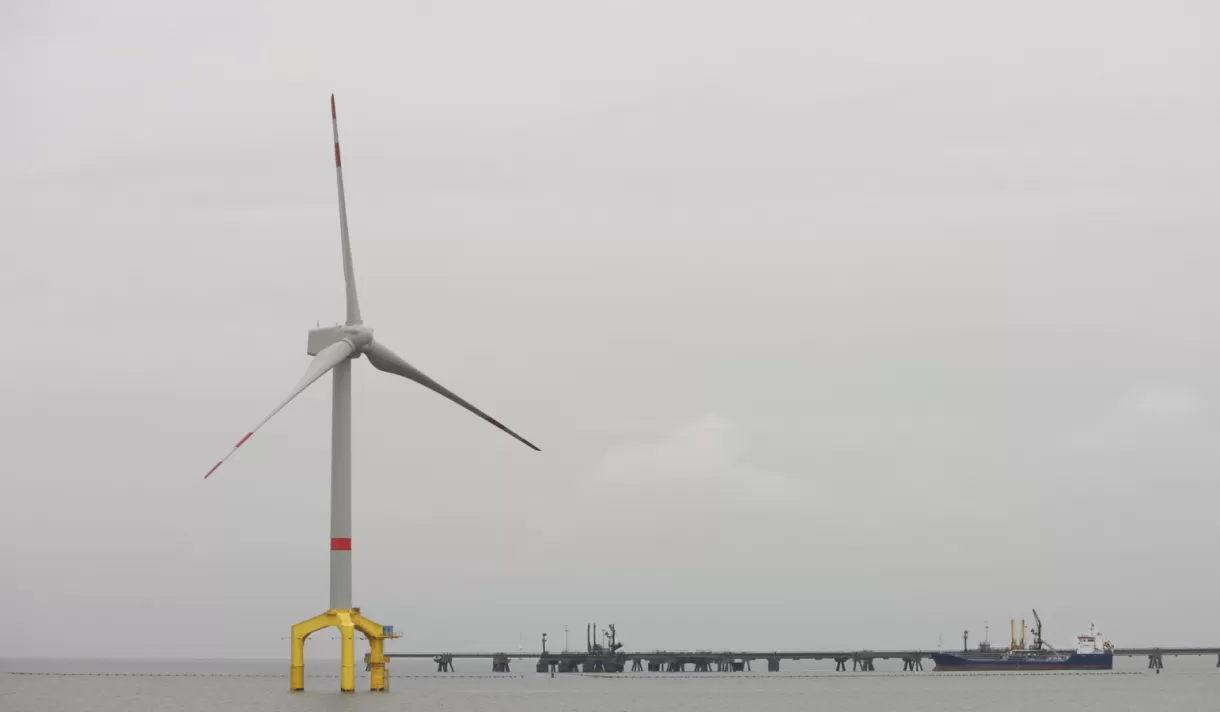
Can the Scottish Government take a 20% public stake in offshore wind?
The short answer? Yes, absolutely.
And now for the long answer…
Whenever you hear us talking about ScotGov taking a public stake in offshore wind projects you might think ‘isn’t energy policy reserved to Westminster?’ and you’d be right; it, mostly, is. But regulation of the energy market isn’t the same as investing in renewables projects.
While the UK Government in Westminster controls the national electricity grid and regulations on pricing, transmission fees, etc., the Scottish Government already holds the legal and financial powers it needs to take public stakes in offshore wind.
Here’s the full scoop on just how ScotGov can make sure offshore wind benefits us all right now.
Has the Scottish Government already invested in offshore wind?
The Scottish Government has already taken a public stake in an offshore wind project!
Off the coast of Dounreay in Caithness, the Pentland Floating Offshore Wind Farm secured around £50 million in direct investment from the Scottish National Investment Bank (SNIB). Crucially, this was not just a grant. SNIB took a stake directly in the project alongside Great British Energy and the National Wealth Fund.
As previous Deputy First Minister Kate Forbes celebrated at the time, this direct stake means Scotland can actively shape local supply chains, support jobs, and directly “receive financial returns” from the power generated.
The precedent has already been set, but now we need more. The Scottish Government did not need permission from Westminster to take an ownership stake in Pentland. If Holyrood can invest public money to hold shares in floating wind off Caithness, it can do this again for other projects.
But, where does the money for this investment come from?
Scotland already has a dedicated institution built specifically for this: the Scottish National Investment Bank (SNIB). SNIB was created by the Scottish Parliament and funded to £2 billion in capital. Its explicit primary mission is to invest and build up Scotland’s transition to renewable energy. ScotGov has used it in the past to invest in energy projects (see above) and it is already legally structured to hold shares and equity in commercial energy infrastructure.
In 2022, the Scottish Government took in £756 million by selling leases to firms looking to develop offshore wind projects in Scottish waters. But that was a one off. If SNIB took minority stakes in future projects, alongside private developers, then the Scottish public would get a share of the profits each year across the turbines’ 30 to 40-year lifespan.
Are energy investment and public ownership reserved to Westminster?
No. While things like energy market regulation and grid management are reserved to the UK parliament under the Scotland Act 1998, ScotGov has the power to own stakes in wind turbines.
According to the Scotland act, here’s what’s actually reserved:
- Westminster sets the rules for how the National Grid connects power lines.
- Westminster runs the Contracts for Difference (CfD) subsidy scheme.
- Westminster sets the rules for utility supply companies and price caps through Ofgem.
However, commercial ownership and property rights themselves are NOT reserved. The Scotland Act does not stop Holyrood from buying assets, holding shares, or owning infrastructure. Need more proof? ScotGov already owns and operates lots of vital infrastructure!
Scotland is missing out, but it’s a policy choice, not a legal barrier.
The question isn’t whether ScotGov can take a public stake in offshore wind, but do they have the political ambition to bring more of our renewables into public ownership?
When politicians say their hands are tied on public ownership of offshore wind, they are making a political choice to prop up a deeply broken energy system, not describing the legal reality.
Scotland has some of the best wind resources on earth. Taking a 20% public stake is completely within Holyrood’s grasp. All that is needed is the political will to make it happen.
Summary: The Scottish government has the legal power to acquire equity stakes in offshore wind projects. While market regulations and grid management are reserved to the UK Government under the Scotland Act 1998, the Scottish Government has the ability to own renewable assets through current devolutionary powers. In fact, Scotland has already proven this through the Scottish National Investment Bank’s (SNIB) equity stake in the Pentland Floating Offshore Wind Farm.