

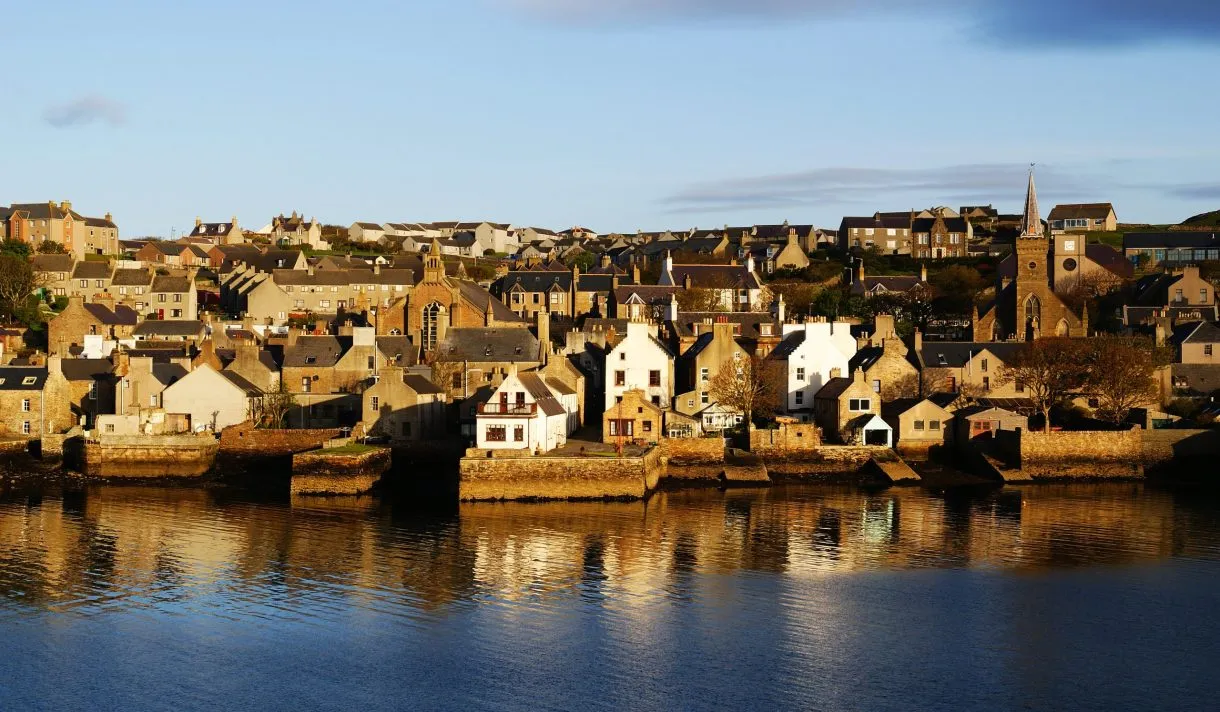
Community-owned energy powering Orkney services
It’s no secret that Scotland’s councils are cash-strapped, with most forced to make cutbacks and struggling to provide important services to local communities.
Orkney Islands Council is taking matters into its own hands with a pioneering plan that is expected to bring in millions of pounds in extra revenue to make up shortfalls in the public purse.
The council is set to become the first in Scotland to build its own renewable energy schemes, which will simultaneously supply green electricity to the grid and generate income that will be directly funnelled into projects benefitting islanders.
The grand plan includes three substantial wind power developments – Hoy, Faray and Quanterness. Each proposed wind farm would host six turbines measuring just over 149m tall, with a generating capacity of 28.8MW. All sites have already received planning consent from Scottish ministers but are at different stages of development. Forecasts suggest the projects could together make up to £3 million a year in profit, which will go to the council as sole owner of the schemes. The revenue will be used to benefit everyone in Orkney through a community fund.
The Quanterness project will be the first to go forward, with work scheduled to start at the site – situated at St Ola, between Kirkwall and Finstown – in spring 2027. Once operational, the wind farm is expected to earn more than £3 million each year in profits over a 25-year lifespan.
In addition, Quanterness will provide £144,000 each year to a location-specific community benefit funding scheme – 60% of this is planned to go to the host community council, with the remainder split amongst the other 19 areas. The total for all three projects would amount to around £432,000 a year, to be shared across Orkney.
The project will also support delivery of a new 220MW interconnector cable, which will transport electricity to the Scottish mainland. It will also help Orkney achieve its environmental goal for a ‘carbon neutral future’ – the council declared a climate emergency alongside other organisations in 2019, and is committed to reducing planet-warming emissions. The schemes, with a combined capacity of almost 90MW, will also contribute to Scotland’s national target of deploying 20GW of onshore wind by 2030.
Orkney’s total greenhouse gas emissions are around 150,000 tonnes annually. Each of the council’s wind farms is predicted to save 43,400 tonnes a year, amounting to 130,000 tonnes over the three sites. This figure takes into account the carbon payback period – the length of time taken to offset emissions produced as a result of a scheme’s construction.
The council’s plans have been shown to have strong support from islanders. Surveys carried out at public consultation events showed more than seven in ten people were in favour of the renewable energy project.
Councillor Heather Woodbridge, leader of Orkney Islands Council, welcomed progress on the plans after a £62.1 million loan to build the wind farm was secured from the UK Treasury’s independently operated National Wealth Fund.
“This is the latest stage in what is an immense project for our council, not only in its scale and ambition but also in its transformative impact on our community and the services we provide,” she said.
“The Quanterness project – as well as supporting the interconnector – will provide the council with much needed income to support vital council services.
“In our discussions with our community they have been consistently clear that they hugely value the services we provide, and they want to protect them.
“In order to achieve that community aspiration this council must explore all opportunities available to us – and the Quanterness wind farm is a great example of that.”
For more details, visit Orkney Community Wind Farms